



Welcome To the Emneth Academy English page!
Here, you will find lots of important and useful information about how English (Reading and Writing) is taught across the whole academy.
Subject Leader: Jonathan Parrish (jonathan.parrish@ema.eastern-mat.co.uk)
Reading
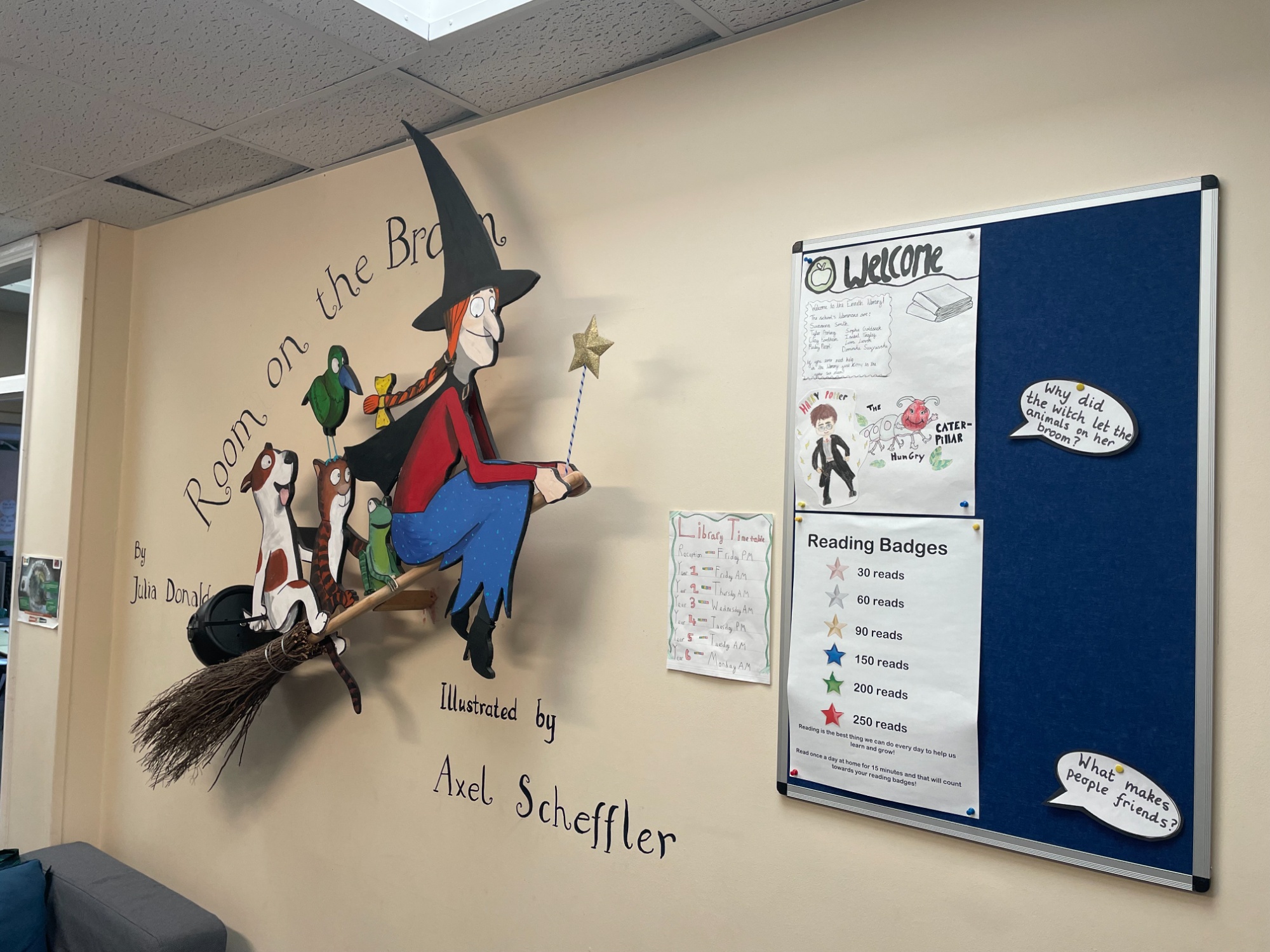
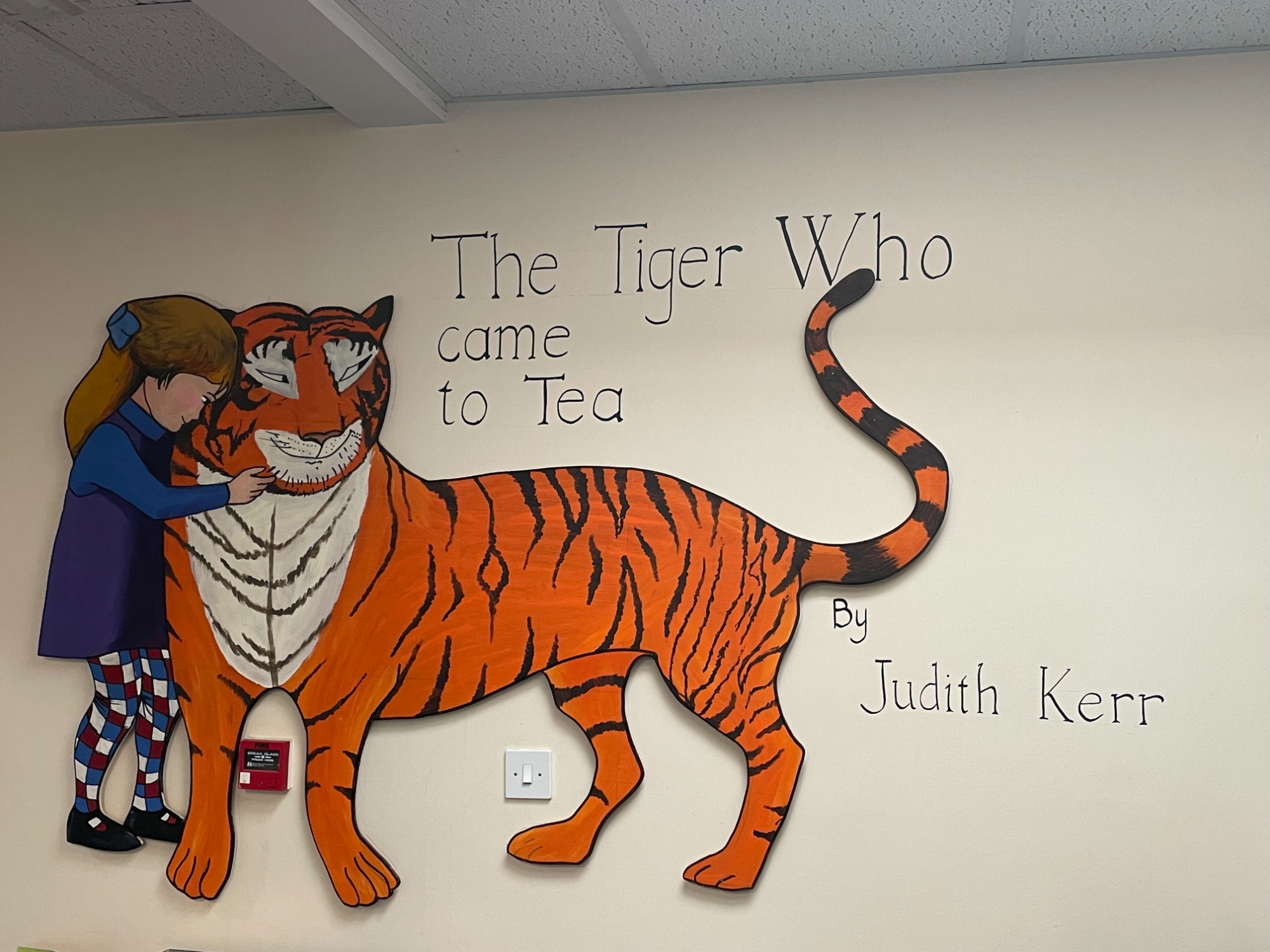
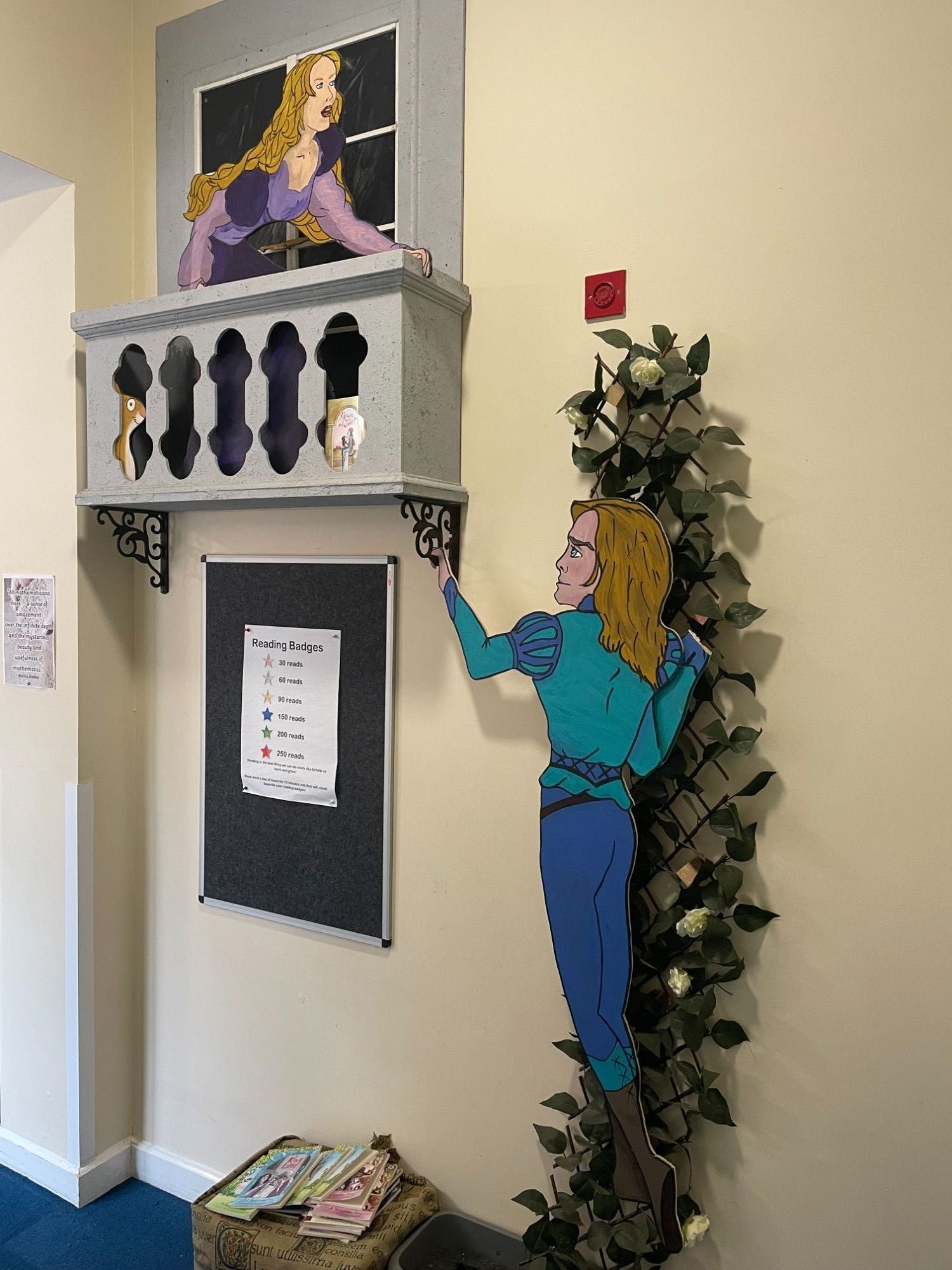
We are so proud of our warm and welcoming library, placed right at the heart of the academy
How is Reading taught at Emneth Academy?
Reading is taught through the teaching of Phonics in Reception and Year 1, using the Little Wandle scheme. For more information on this, please visit the Phonics curriculum page.
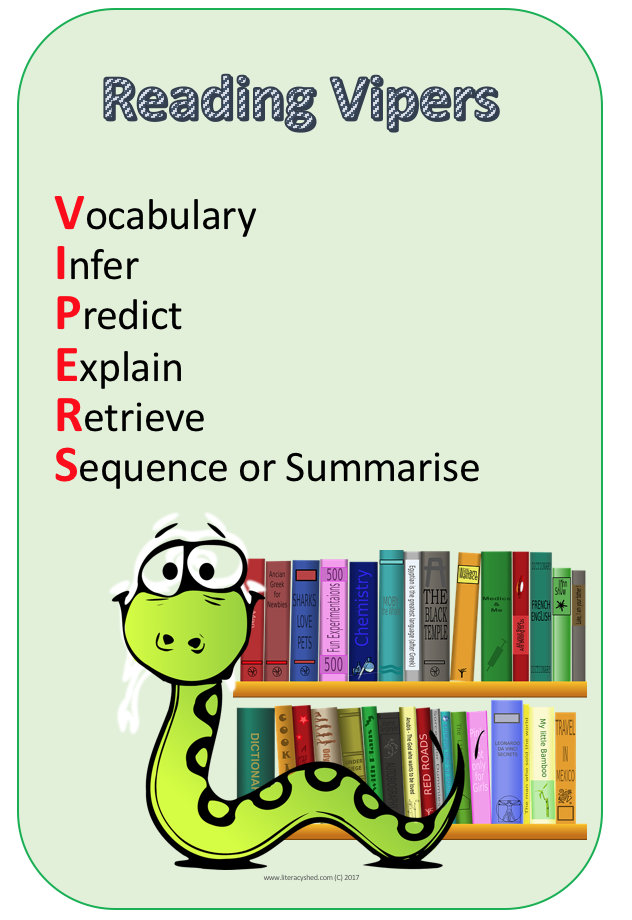
At the beginning of Year 2, during the first half term, pupils recap Phase 5 phonics to embed their prior learning. After October half term, they embark on Whole Class Reading lessons, which have a very clear lesson sequence: recap previous learning, introduce new vocabulary, read a section of the text, answer quick-fire questions to check understanding, before finally practising and applying one of the VIPERS skills (see left).
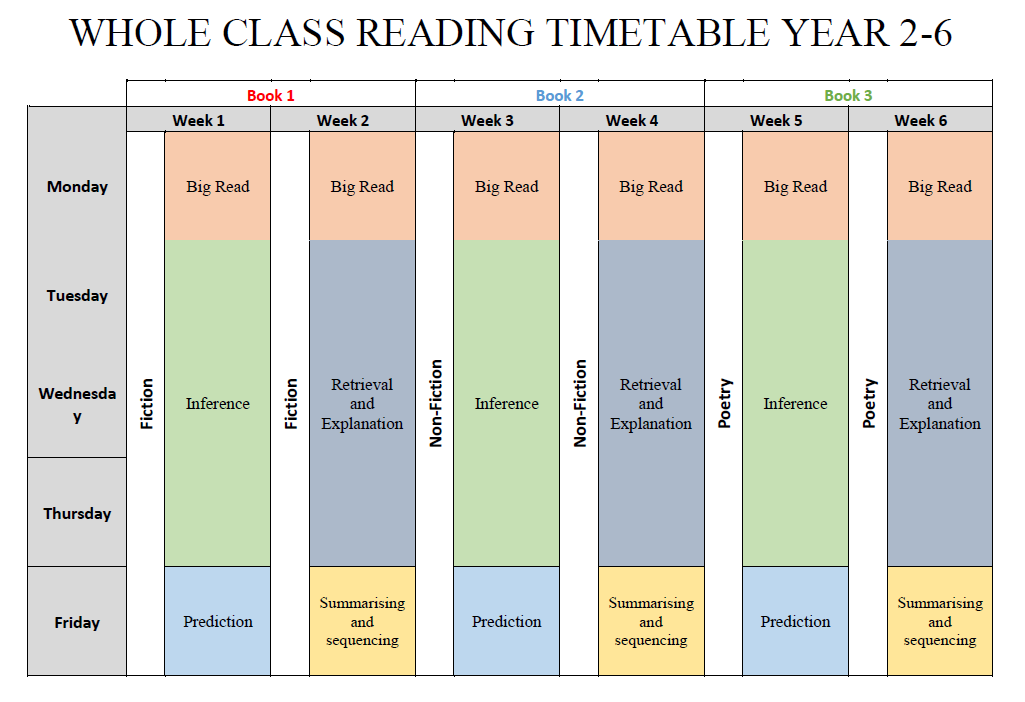
Reading texts are high quality and provide the appropriate challenge for the children during lessons. The texts have been sequenced carefully across the whole school curriculum, so that links can be made on a pupil's journey from Reception to Year 6. We recognise that all pupils deserve exposure to different text types. Therefore, the timetable below reflects this (see bottom right). Across a typical half term, children read a fiction, non-fiction and poetry book. More consideration is given to Retrieval and Inference, as these types of question are more common in the end of Key Stage 1 and Key Stage 2 assessments.
Writing
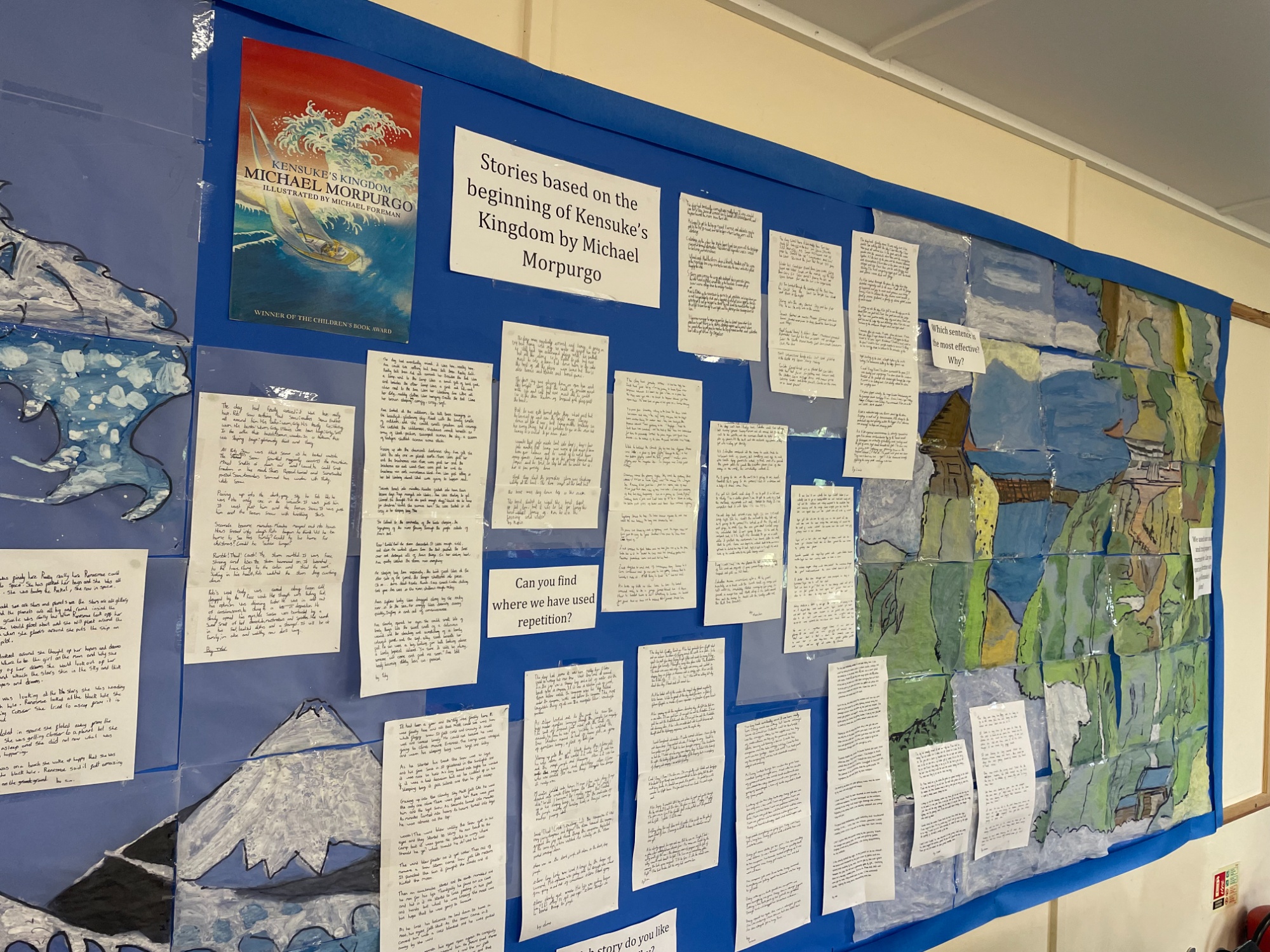
Writing
Intent
At Emneth Academy, we want our pupils to use Standard English when speaking, as we recognise that this has a direct impact on their writing. We strive for pupils to develop their writing skills so that they have the stamina and ability to write at the age expected standard. We want our children to leave our Academy with a love for writing and to write for a range of audiences and purposes.
Implementation
- We follow ‘The Write Stuff’ Jane Considine approach to teaching writing across the whole Academy. Children are able to see a clear sequence across a unit, where they build up to completing an independent piece. During a ‘sentence stacking’ lesson, children are exposed to extremely high-quality sentence models written live by teachers, so that pupils can witness the writing process.
- Children have access to dictionaries and thesauruses during writing lessons to improve their vocabulary, teachers recognise the importance of this and the impact it has on writing.
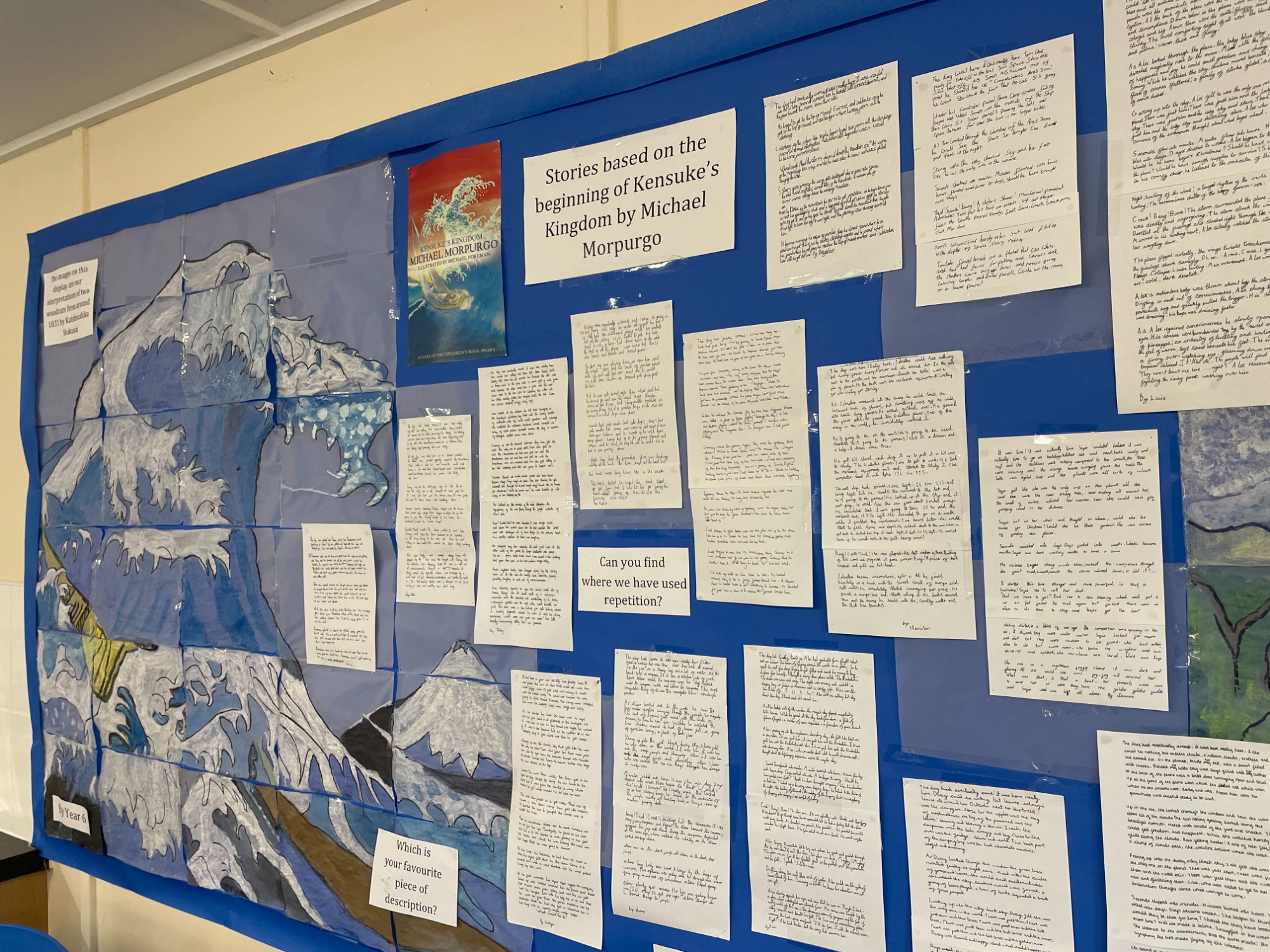
- Every two weeks, children in all year groups complete an independent piece of writing based on a stimulus. This is recorded in books and used for teacher assessment data. Children are encouraged to use the skills and knowledge they have been taught during their writing lessons and apply them to their independent pieces.
- Children (and staff!) participate in a yearly handwriting competition across the whole school, in order to promote a sense of pride in presentation.
- Staff are given regular training on their own handwriting to ensure consistency across the school, as a result, children begin to join their letters from Year 1.
- Spelling, grammar and punctuation are important aspects of writing and we use the EdShed scheme of work. SPAG is taught at the beginning of every writing lesson and focuses on what children need to know. The curriculum is sequenced carefully, for example: children are taught how to use question marks in Year 1, so that they can learn how to use a rhetorical question in Year 4.
- Children practise writing in various genres so as to broaden their knowledge. The careful sequencing of units means that children experience writing in a variety of fiction, non-fiction and poetry styles.
- Careful consideration is given to how children can access writing across the curriculum, in all year groups. For example, within History, Geography and Science lessons, pupils are given assessment tasks often in the form of extended writing and essays.
- A half termly moderation of English books is completed at staff meetings, to check that standards are being met and that the curriculum Is being covered.
- Staff CPD is booked for Year 2 and Year 6 staff in the Autumn term to prepare for moderation, so that they are up to date with the latest changes and updates to frameworks.
Impact
Our children enjoy writing across the curriculum and take pride in their written work. Presentation of work and handwriting is high. We strive for children to achieve their maximum potential by giving them the skills and vocabulary needed to become successful in the next stage of their education.
Reading
Intent
At Emneth Academy, we recognise that reading is a tool for life. We know that, in simple terms, reading unlocks the rest of the curriculum. As an Academy, we want our children to love reading and leave us at the end of Year 6 as accomplished and fluent readers. If children at our academy fall behind for any reason, we endeavour to ensure that they catch up quickly. We firmly believe that every child should read confidently and fluently before they progress to the next stage of their education.
Implementation
- We recognise that giving opportunities for pupils to read is of paramount importance. As a result, they read daily in all lessons. A love of reading is shared from their first day at school through daily storytelling sessions.
- Phonics is taught from day one in Reception through the use of the Little Wandle scheme of work. All staff are given frequent training updates to ensure the teaching of Little Wandle is the best it can be.
- In Key Stage 1, pupils take home a phonic book to read, along with a reading for pleasure book from the library. As they pass their phonics screening check, Salford Reading Age Tests determine their reading level. Children in Key Stage 2 take home reading for pleasure books.
- Emphasis is put on reading fluency from the end of year 1, with staff using strategies such as echo and choral reading to develop this.
- In Reception and Year 1, children are taught using Little Wandle. At the beginning of Year 2, Phase 5 phonics is reviewed before Whole Class Reading lessons begin.
- Whole Class Reading lessons are taught from Autumn 2 in Year 2 to Year 6, focusing on VIPERS skills. A range of high-quality fiction, non-fiction and poetry is used.
- Parents are engaged through volunteers who read with children.
- Teachers read to children for at least ten minutes daily.
- Two reading reward systems encourage reading at home: a badge system and a raffle system.
- Intervention groups support pupils who did not pass the Year 1 phonics screening.
- Year 6 librarians run a library club to support younger pupils.
- Reading is used in assemblies as a calming and regulation strategy.
Impact
Attainment in reading is measured using statutory assessments in EYFS, Year 1 (phonics screening), and KS2. Additional assessments include Salford Reading Age tests and PiXL assessments. Pupils develop strong reading skills, enthusiasm for reading, and progression across year groups.